

INSIGHTS
Data center engineering
&
construction

This outdated data center practice is costing you big money and here’s how to avoid it
Why does the data center industry continue to use the cost per MW model to guide design and construction decisions? There is a better method.
This outdated data center practice is costing you big money and here’s how to avoid it
Why does the data center industry continue to use the cost per MW model to guide design and construction decisions? There is a better method.
The use of cost per MW as the key metric early in the data center design process is prevalent in the industry. It’s often used when determining design decisions and their relation to the cost to build.
However, the metric leads to a host of inconsistencies and lost opportunity to optimize the design, taking away from the use of another metric that often is most optimal for early decision making.
As the data center industry continues to mature, the intense focus on cost per MW modeling during design is switching to a process focused on using total cost of ownership (TCO) to drive evaluation and optimize design decisions. TCO is important for evaluating costs that aren't always reflected in upfront pricing.
Contrariwise, the cost per MW model is fixated on first cost only and does not account for a true data center development strategy. And since there is so much variability in data center design and construction, the idea of using a cost per MW model across a portfolio of data centers in multiple markets is a risky measure. This may lead to decisions that do not necessarily meet the strategy of the business. A strategy that should be focused on factors that drive TCO.
Worse yet, operators in regions where the demand is largest such as, Northern Virginia or the Silicon Valley have the most to lose when cost models are not accurate. Don’t be surprised if you are one of them.
Why operators in regions where the demand is largest have the most to lose when cost models are not accurate.
To prove this point, we’ve laid out the negative effects that outweigh the benefits of using the cost per MW model as an appropriate strategy. Plus, what we at Constructiv believe are better metrics for assessing data center construction costs.
Compare and contrast the local energy costs and availability of renewables in three major regions: Northern Virginia, Phoenix and Northern California. According to JLL’s Data Center Outlook for 2019, Northern Virginia’s average cost per kWH is around 5.2 cents, Phoenix at 6.4 cents and Northern California at 13.4 cents. With this in mind, the optimal design decisions are only made by using a TCO module. The TCO will evaluate the first cost of energy efficient mechanical systems, for example, as well as the cost of energy over the lifetime of the data center.
Furthermore, PUE is another metric in the industry used to guide design decisions. Using PUE to guide the design will dramatically change the first cost of that build. There are many variables that go into identifying the PUE of a data center facility, generally speaking though, the closer the PUE is to 1.0, the higher the upfront cost to construct.
As has been discussed heavily in the data center industry, Google has been providing data on their trailing twelve-month PUE since 2008 on the entire Google fleet. Throughout this span, Google has been able to reduce their overall PUE from 1.26 to 1.1. Google accomplished this through a variety of design elements that would drive up the cost/MW of the installation. Their decisions are likely driven by a combination of TCO modeling as well as a desire to lead the industry in energy efficiency.
Using a pure cost/MW model doesn’t allow for an intelligent evaluation or an optimal decision for the business. Contrary to the Google model, and for the bulk of data center developers, simply driving PUE down for the sake of marketing a low PUE doesn’t always drive to an optional cost decision during design. This is specifically true in very low cost of energy locations, where the payback on the higher first cost of low energy systems may be 10+ years or more. Thusly, Constructiv believes TCO modeling is the optimal way to truly make an intelligent cost-based decision.
One other consideration is the need to accommodate future change. Considering the future cost scale of the infrastructure to meet a clients’ changing needs and the flexibility of that architecture can impact the cost per MW to build. Highly flexible mechanical, electrical and plumbing systems come at a higher upfront construction cost but are essential in attracting many different customer types (hyperscale, wholesale, retail, managed service providers).
Examples of flexible and scalable architecture include: modular power and cooling systems; prefabricated mechanical and electrical infrastructure that may be added to an active design without affecting current production; rack level cooling and row containment; and grooved mechanical piping technology. These technologies along with others are affording builders and operators alike the option to scale as the business does versus overbuilding on day one.
Using a TCO model with consideration of the necessity for future change will optimize the decision-making process during design and prohibit a myopic view of first cost/MW only.
Shaping your data center cost strategy.
Beyond the cost per kW/MW model there are a number of factors to consider. These factors are all vital inputs that dramatically effect TCO.
The type of construction performed (greenfield vs. brownfield).
Marketability of the property.
Taking advantage of environmental conditions.
True scalability for future expansions.
Flexibility to cost effectively implement future changes.
The implementation of energy efficient measures.
In essence, the business strategy should always drive design and TCO, which should then drive the cost molding to support decision making.
Constructiv, as one of the nation’s principal data center sector construction and construction management firms, undertakes the accurate estimating of data center costs by considering a host of factors. Coupled with lessons learned from over 2o years in the industry.
Constructiv Builders (Constructiv) is an organization focused on mission critical, 5G and edge data center deployments. Constructiv, by viewing these installments from a constructor’s perspective, offers client’s flexibility and vast industry experience, giving them a competitive advantage in the design and build of complex technical projects.
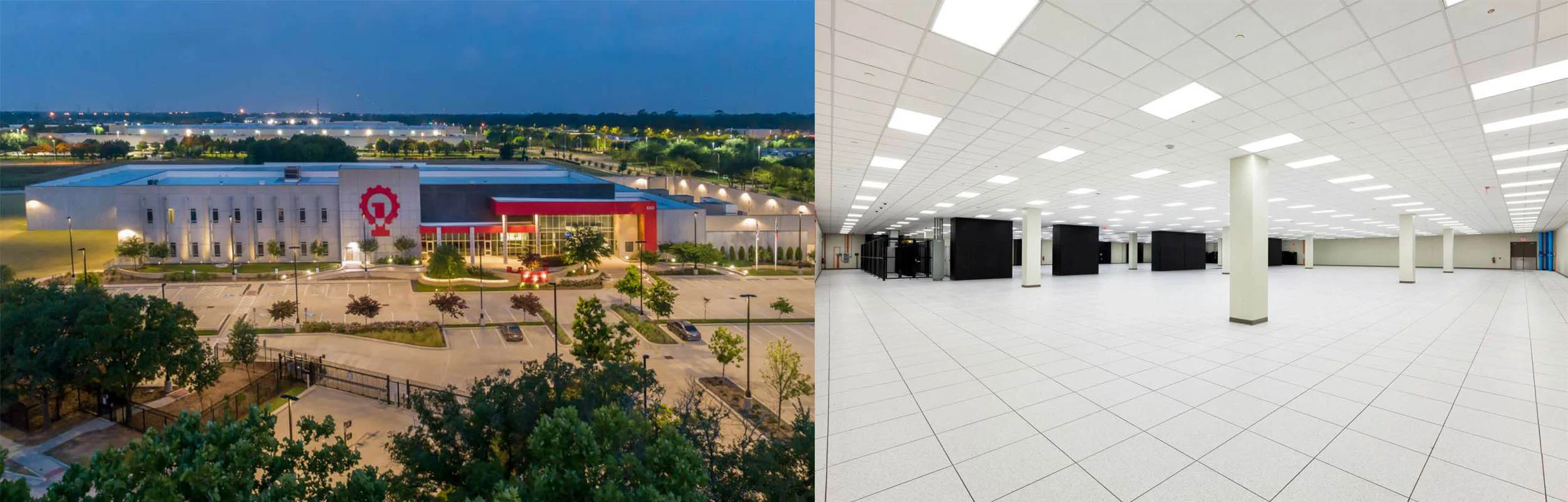
Innovation in Technology is Fueling Growth for Data Foundry
Austin-based Data Foundry is adding 27,000 square feet to its north Houston data center campus. Constructiv Builders is the Construction Manager for the high-reliability project.
Innovation in Technology is Fueling Growth for Data Foundry
Austin-based Data Foundry is adding 27,000 square feet to its north Houston data center campus.
This will grow the campus to 377,000 square feet and accommodate the growing demand from Houston's health care, energy and manufacturing industry sectors, which all rely heavily on technology.
Built with disaster recovery in mind.
Distinctive to this campus, is the ability to withstand 185 mph winds due to its elevation above the 500-year floodplain, allowing for continued operation during hurricanes and tropical storms.
The campus also provides dedicated office spaces, lockers, showers, a washer and dryer, break room and kitchen for both Data Foundry team members and its tenants who have to remain at the data center during natural disasters.
Our involvement.
Constructiv Builders, an organization focused on mission critical, 5G and edge data center deployments is the Construction Manager for the high-reliability project.
About Data Foundry.
Data Foundry is a leading provider of Texas data center colocation services with over 20 years of data center operations experience.

Where did all the skilled labor go?
Industrywide skilled labor shortages and transformative technologies have changed the construction landscape and the options are to innovate or become obsolete.
Where did all the skilled labor go? Changing the construction landscape.
Industrywide skilled labor shortages and transformative technologies have changed the construction landscape and the options are to innovate or become obsolete.
The Manpower Group publishes the talent shortage survey every year and in 2018 talent shortages reached a 12-year high. In the United States alone, 46% of employers are not able to fill their open positions. While the talent shortage epidemic is continuing to reach new heights, bursting onto the scene are new job opportunities like: Big Data Specialists, User Experience and Culture Experts, Interaction Designers, Robotics Engineers and Blockchain Specialists. Emerging professions like those mentioned above are dominating the new frontier of possibilities for the educated, ever growing middle class and is now leaving behind the skilled trades of yester year.
Who wouldn’t want to be a Big Data Specialist, come on? I am kidding, but all joking aside this leap into uncharted career waters has created a gaping hole in tradesman that have made a living for centuries in the construction and building space. We have seen such a decline in the labor force that as construction professionals we have had to completely re-think our go-to-market strategies and continually enhance and innovate our solutions.
Drivers of change.
In the latest World Economic Forum (WEF) future of jobs 2018 release there were four specific areas identified in which technological advancements are completely turning the job landscape upside down. Those include ubiquitous high-speed mobile internet, artificial intelligence, widespread adoption of big data analytics and cloud technology. Most of these technologies are not trends or fads, they are products and services that have a profound effect on the way in which we interact and communicate with one another every single day.
We can also look at the socio-economic trends of the future and it is not hard to uncover that there is an increasingly large talent pool of educated individuals that yearn to be a part of this wave of new careers. Because of these reasons and the fact that schools for the last 30 years or so have put little emphasis on encouraging skilled construction trades there is less of a desire to enter the skilled or craft tradesman workforce. We have entered a day and age where new employment opportunities and advancing industry ventures are created faster than traditional professions can become obsolete, examples like mail carriers, librarians, fast food cooks and travel agents.
Another driver of change within the skilled trade professions and discussion of hot topic centers around the stigma associated with professional trade work. Graduating high schoolers in recent years have been taught that the well-paying and often highly stable jobs are those that come out of earning a college degree. Is that truly the case though?
Contrary to popular belief, high school graduates destined to earn four-year college degrees often come out of college with significantly higher debt/income ratios and it is not uncommon for college graduates to earn less than their trade school counterparts during the first few years of employment. Additionally, skilled trades work requires training, apprenticeships, two-year associate degrees and further developmental education all the while receiving compensation for their efforts. Our school systems have not fully addressed the misperception that surrounds the professional trade industry and in turn most high school graduates fail to see all the benefits that come with pursuing a career in the trade fields.
The Fourth Industrial Revolution.
If you go back in history and look at the first two industrial revolutions, you will find that those civilizations were modernized by manual workers producing goods and services with their bodies to advance the greater good of their perspective societies. Now, review the last (Third) and most current revolutions (Fourth) and you can see that the advancements and the most profound disruptions in human history have come from that transition from using our bodies to using our minds.
Most folks do not realize the impact that Artificial Intelligence has on their ever day lives and will continue to have. Think about an improved quality of life at home, work and play due to innovations with robotics and automation that give us the freedom to worry less about agriculture, our power grid and physical infrastructure. Ultimately, our need to be forever and always connected to our things through the invention of the Internet and the more recently coined “Internet of Things” (IoT). The Fourth Industrial Revolution paradigm shift has completely altered the way we produce goods and services and we believe will continue to innovate and push the boundaries of what was traditionally done by manual labor.
A new(er) pathway to construction success.
While these ideas may seem like they negatively impact the construction community, the skilled labor availability and our economy it paves the way for innovation and advancement within the design and construction business. Technologies like Virtual Design and Construction, BIM in 5,6 and 7D, Artificial Intelligence as well as off-site and modular construction incorporates components of the new job frontier that will make the construction profession that much more sought after in the future.
Incorporating these transformative technologies and others into the construction landscape to help fill the gap of skilled and craft tradesman will continue to grow. As a result, it will also aide in the reduction of human error and onsite risk.
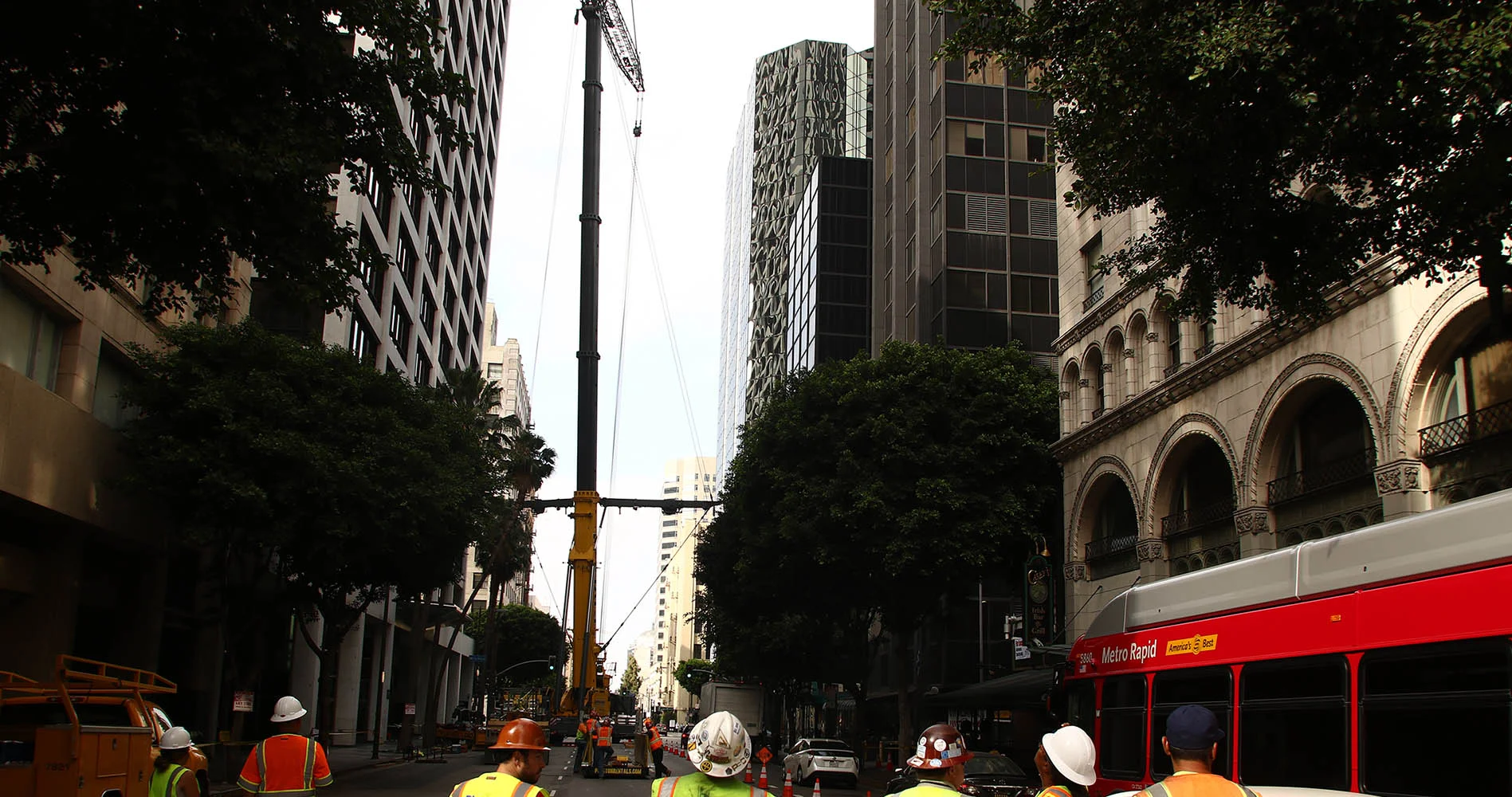
Downtown Data Center Builds
Take a glimpse at some of the world's most densely populated data centers where Constructiv is building data center assets for some of the top-rated Colos in the industry.
Downtown Data Center Builds
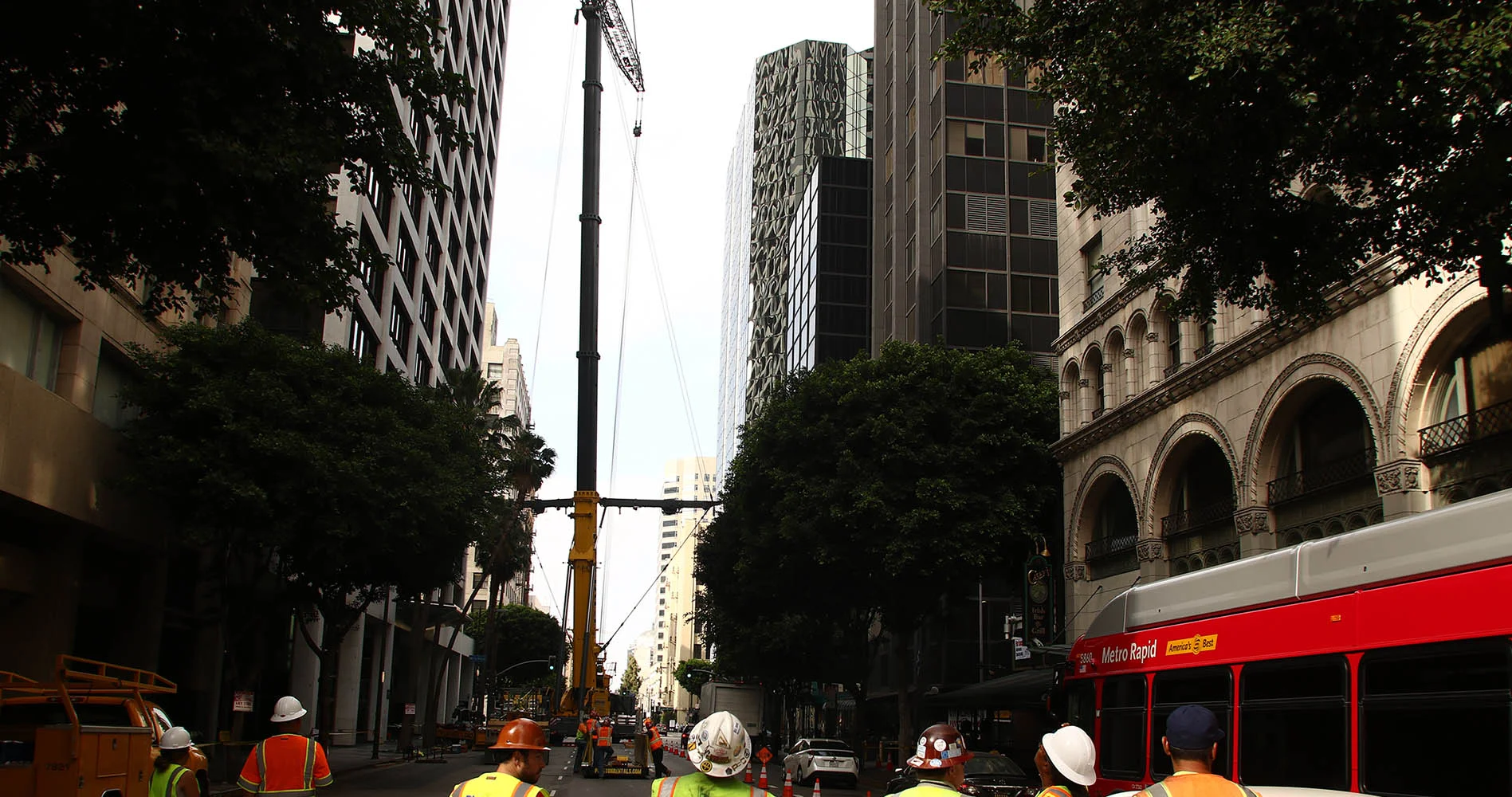
Take a glimpse at some of the world's most densely populated data centers where Constructiv is building data center assets for some of the top-rated Colos in the industry.
Constructiv is enhancing the infrastructure of some of the most densely populated critical spaces in downtown areas. As Construction Specialists in the renovation, upgrading and enhancing of data center and telecom buildings in active environments, Constructiv travels the country serving colo and cloud providers with best-in-class service.
Maintain your claim in this highly competitive market and let Constructiv evaluate your facility infrastructure options. Don’t allow lack of robust connectivity keep your business from being a true contender.